
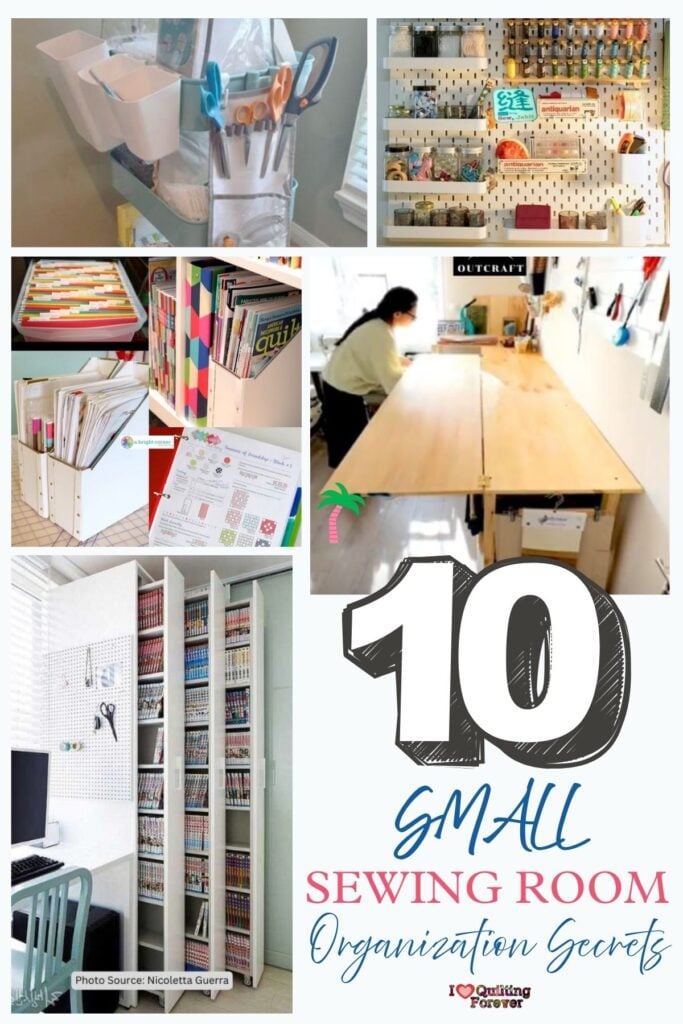
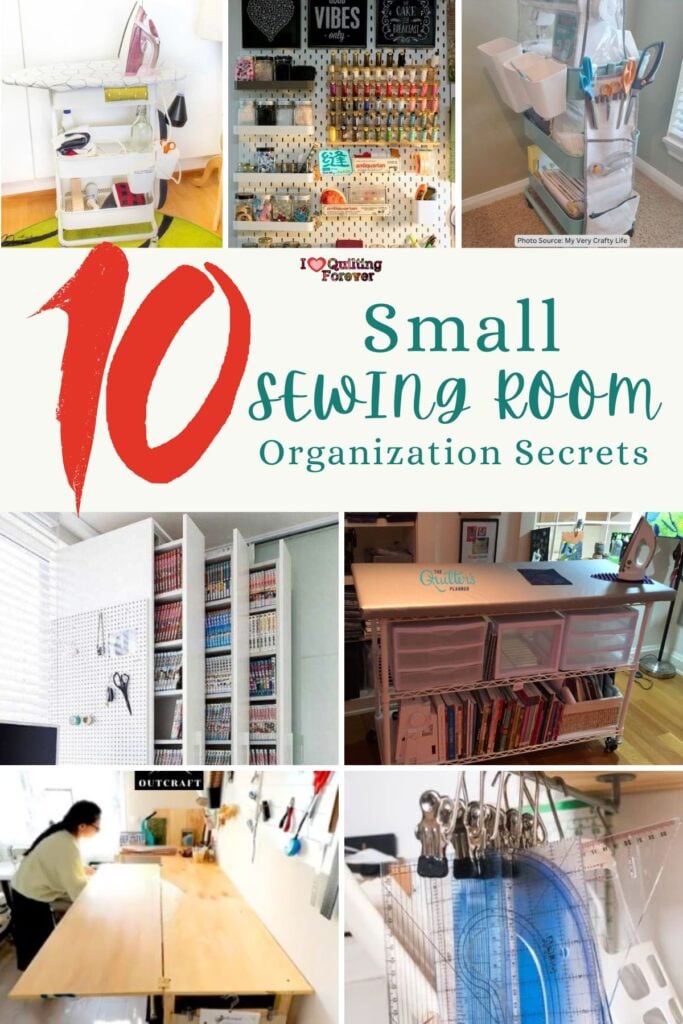
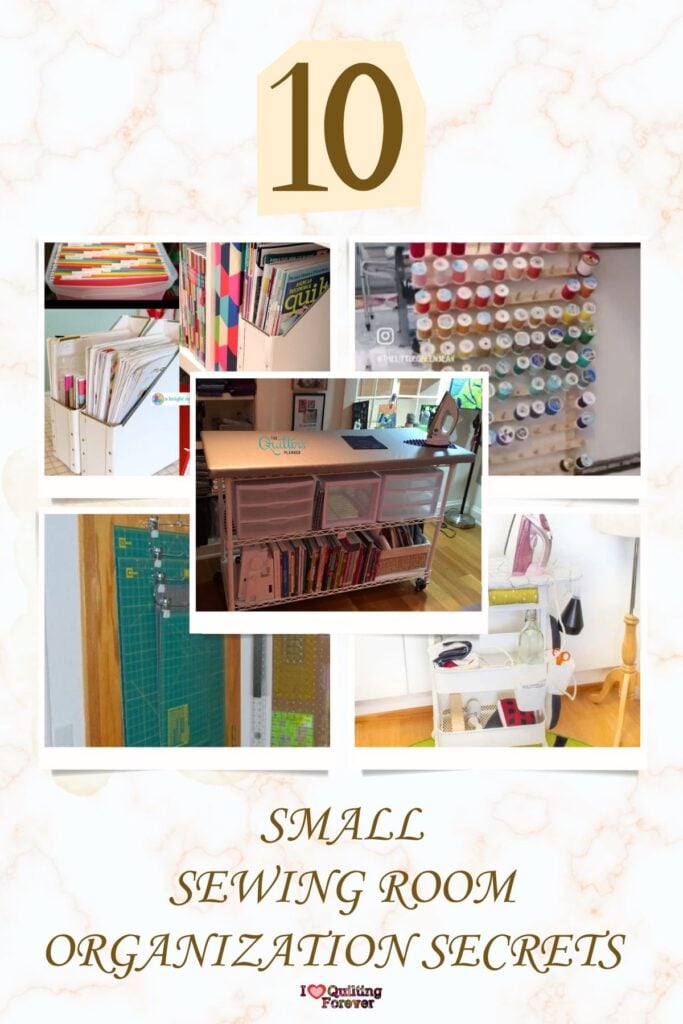
Sewing is a passion that requires room to breathe, but what happens when your creative ambition is bigger than your actual room? Many of us struggle to find a dedicated spot that fits everything we need without feeling cramped or chaotic.
Working in a tiny area often means constantly shifting piles around just to find a clear surface to cut or press. It can feel overwhelming when your sanctuary becomes a source of stress rather than a place of inspiration.
However, having a small footprint doesn’t have to limit your possibilities; it just requires a smarter, more strategic approach to how you use the area. We have gathered ten brilliant organization secrets designed specifically to help you conquer clutter and maximize every square inch of your sewing corner.
Clever ways to organize every piece of fabric in your room
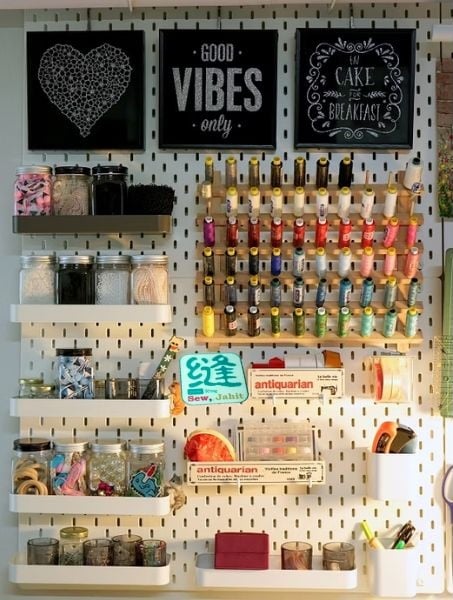
If you have run out of drawer space, the secret lies in looking up at your walls. This brilliant setup uses a pegboard system to transform a blank wall into a fully functional storage display for threads, scissors, and notions.
It allows you to keep your most-used tools visible and within arm’s reach, eliminating the need to dig through cluttered boxes. The modular design means you can customize hooks and shelves to fit your specific collection, whether it’s oversized spools or tiny clips.
By using clear containers and a neutral board color, your colorful sewing supplies become part of the room’s decor. This system is perfect for small rooms because it clears your table surface while adding a touch of personalized beauty to your creative nook.
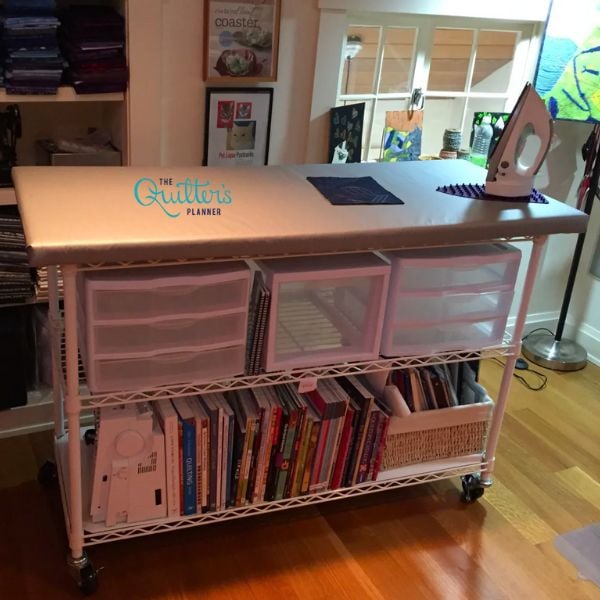
In a small sewing room, dedicating floor space to furniture that serves only one purpose is rarely an option. This secret involves building a custom rolling pressing table using affordable wire shelving units and a sturdy plywood top.
Not only does it provide a spacious, stable surface for pressing your quilt blocks, but the shelves underneath offer massive storage potential for heavy items. The addition of wheels makes this station mobile, so you can pull it out when you need to iron and tuck it away when you need floor space.
It is a rugged, customizable solution that maximizes every square inch of vertical space below your ironing board. This setup transforms a standard chore into a smooth, organized part of your workflow.
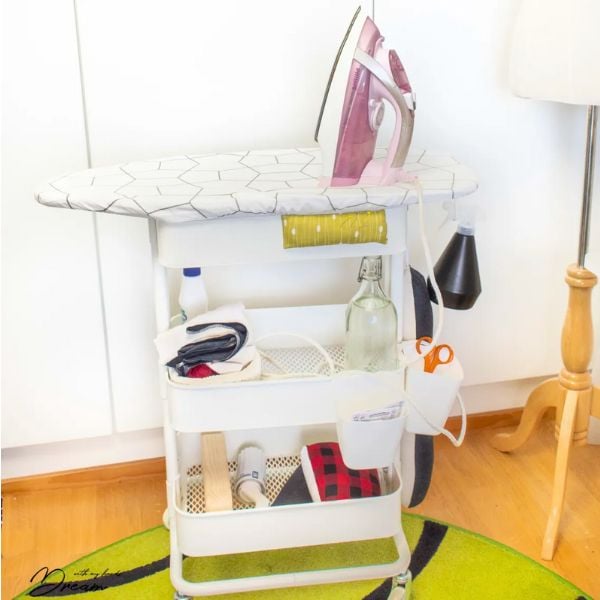
For those who need a pressing station that has an even smaller footprint, this specific cart hack is a game-changer. By securely attaching a small tabletop ironing board to the top of a rolling utility cart, you create a dedicated mobile ironing station that fits into the tightest corners.
The cart’s baskets underneath are perfect for holding your iron, spray starch, and pressing hams, keeping all your ironing paraphernalia together in one portable unit. This setup prevents your large ironing board from permanently taking up floor space and keeps your pressing tools organized.
It is an ideal “secret” for quilters who need to move their station next to their sewing machine for quick seam pressing. It allows you to adapt your room layout instantly depending on the project size.
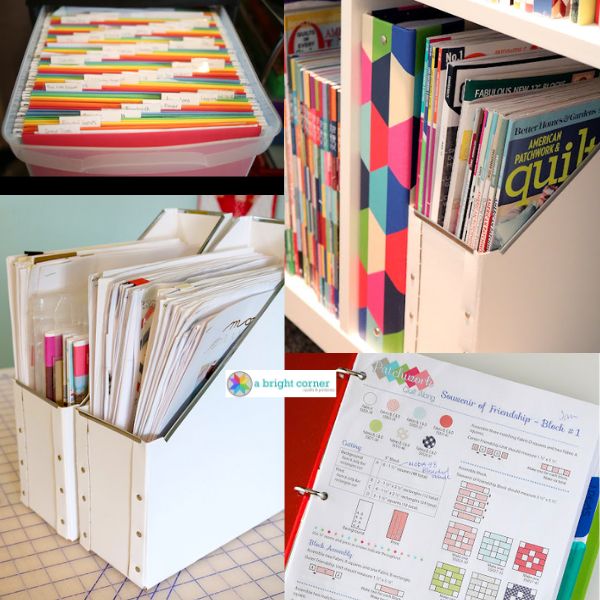
Paper patterns and printed PDFs can quickly become an unruly pile of paper chaos if not managed properly. This organization secret utilizes sturdy magazine holders and mini-binders to categorize and protect your valuable pattern collection.
By storing loose papers in binders with sheet protectors, you can flip through your options easily without unfolding fragile tissue paper or losing pieces. Magazine holders keep thicker pattern envelopes and booklets upright and visible on a shelf, rather than stacked in a teetering pile.
This method not only protects your patterns from damage but also makes browsing for your next project an inspiring experience rather than a frustration. It is a simple, affordable way to turn a messy shelf into a neat, professional-looking library.
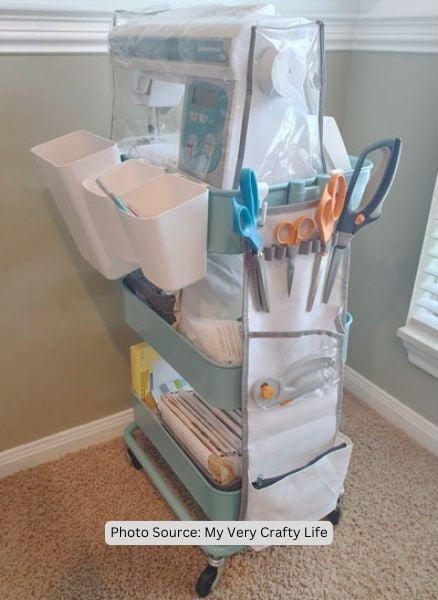
When you don’t have a permanent desk for your machine, a 3-tier rolling cart can become your entire sewing room on wheels. This secret focuses on using the top tier of a sturdy utility cart to house your sewing machine and pedal when not in use.
The lower tiers are outfitted with smaller bins and organizers for notions, while side-mounted cups hold scissors and marking pens for quick access. This allows you to wheel your “sewing room” into a closet when guests arrive and roll it back out instantly when inspiration strikes.
It is the ultimate flexibility hack for multi-purpose spaces, ensuring that setup and cleanup time is cut in half. You will never have to waste time searching for your basics because they travel with the machine.
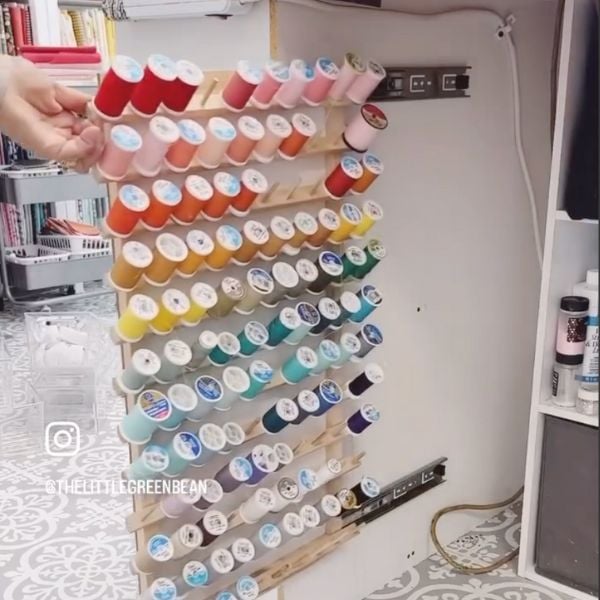
This brilliant hack takes a standard wooden thread spool holder and transforms it into a hidden, gliding storage solution. By attaching drawer slides to the back of the wooden rack, you can mount it securely under a table or countertop.
This utilizes often-wasted under-desk space, freeing up valuable wall and surface areas in your small sewing room. The sliding mechanism allows you to easily pull the entire collection into view for quick color selection and push it back out of the way when you’re done.
It keeps your spools neatly organized and protected, all while remaining perfectly accessible. This is the ideal “hidden in plain sight” secret for maximizing storage without adding visual clutter to your creative space.
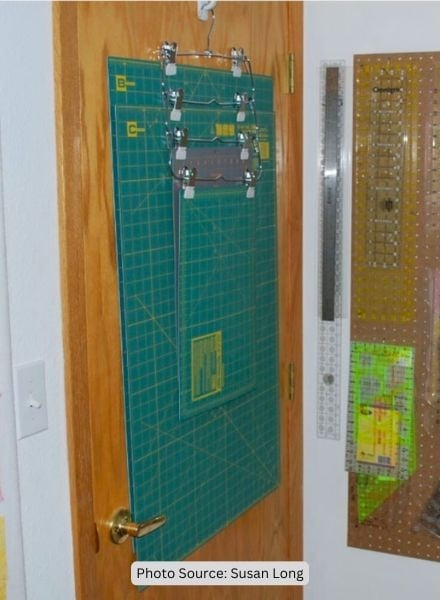
Large cutting mats are often difficult to store because they can warp if not laid flat or hung correctly. This clever solution utilizes the often-ignored space behind your sewing room door to keep them perfectly straight and out of the way.
By using simple skirt or pant hangers with strong clips, you can grip the mats securely and hang them from a hook or over-the-door rack. This method allows you to cascade multiple mats of different sizes vertically, ensuring they take up zero floor or table space.
Keeping them flat against the door prevents the dreaded warping that happens when they are leaned against a wall or shoved under a bed. It is a budget-friendly hack that turns a passive surface into an active storage area, keeping your expensive tools in pristine condition.
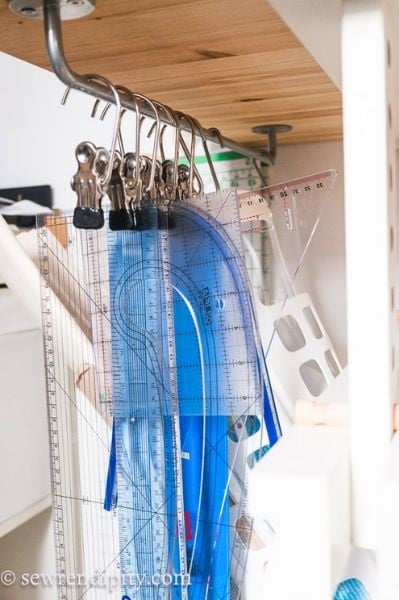
Acrylic quilting rulers are expensive and prone to chipping if thrown into a drawer, but this secret solves that problem elegantly. By installing a simple kitchen rail with S-hooks or binder clips under a shelf or table, you can hang your rulers safely out of the way.
This keeps them visible and prevents them from scratching against each other, preserving their markings and edges. It utilizes “dead space” that would otherwise go unused, freeing up precious drawer real estate for other notions.
This method makes it incredibly easy to grab exactly the size you need without digging through a stack. This simple change keeps your cutting mat clear and ready for actual work.

Finding room for a large cutting table in a tiny studio often seems impossible, but this foldable design offers the perfect compromise. This stylish and practical piece of furniture functions as a compact console that flips open to reveal a massive workspace whenever you need it.
The hinged tabletop unfolds smoothly to double your surface area, allowing you to spread out large quilt backings or patterns with ease. Underneath the main surface, a built-in storage shelf provides a convenient home for your heavy equipment or bins of fabric, keeping them close at hand.
When you are finished for the day, simply fold the top back down to reclaim your floor space instantly. It is a smart, space-saving investment that gives you the luxury of a professional cutting station without permanently crowding your room.

For a massive amount of storage in a minimal footprint, nothing beats a tall, narrow pull-out cabinet system. This ingenious design features multiple vertical “doors” that slide open to reveal deep, hidden shelving units.
Each pull-out section contains several shelves, providing ample space for your entire pattern collection, reference books, or fabric bolts. When closed, the cabinet presents a clean, seamless facade that completely hides the visual clutter of your supplies.
The smooth sliding mechanism brings your materials directly to you, making it effortless to browse without digging through dark cupboards. It is the perfect solution for adding significant, organized storage to a tight corner without making the room feel crowded.
Organizing a small sewing room is about making every inch count and finding joy in efficiency. It just takes a little creativity and the right strategies to turn a tight squeeze into an inviting workspace.
By borrowing these secrets and adapting them to your own home, you can create a space that invites you to create rather than clean. Whether it is utilizing vertical space, creating multi-purpose furniture, or refining how you store your patterns, every little change adds up.
We hope these tutorials and tips inspire you to tackle your own sewing corner today. Happy organizing and happy quilting!
myrna
Sunday 11th of January 2026
love your organization
Glyn
Wednesday 18th of March 2026
We’re so happy you enjoyed the small sewing room organization ideas we curated. Happy quilting, Myrna!
myrna
Sunday 11th of January 2026
love your organization
Glyn
Sunday 18th of January 2026
So glad you liked the curated small sewing room organization secrets roundup. We’re thrilled it was helpful. Happy quilting, Myrna.